
An ultrasonic diffuser uses a piezoelectric ceramic plate to agitate water at high frequency. A small fan then carries the resulting cool mist through the outlet, dispersing the added fragrance into the room.
Two diffusers can look nearly identical while using different tank materials, atomizing plates, airflow paths and control systems. For purchasing teams, the useful comparison is not appearance alone—it is how the model performs, how it is cleaned and which specifications can be verified before production.
What Is an Ultrasonic Diffuser?
An ultrasonic diffuser is a water-based aroma device. The user fills the tank to the indicated level, adds the amount of oil permitted by the product instructions and starts the mist function. The diffuser does not boil the water. Instead, its atomizing plate creates rapid movement at the water surface, producing droplets that are directed out of the cover by airflow.
Ultrasonic technology is widely used because it supports compact products, quiet operation, decorative housings, timer modes and automatic shut-off on appropriately designed models. Exact capacity, runtime, mist output and operating noise must be confirmed for each product rather than assumed from its appearance.
Water-based mist
The tank holds water and the approved quantity of essential oil. Mist carries the fragrance through the outlet.
No heating element
The atomizing process relies on vibration rather than boiling the water or warming the oil mixture.
Light local moisture
The unit releases water droplets, but a standard diffuser should not be positioned as a substitute for a dedicated humidifier.
Main Components of an Ultrasonic Diffuser
| Component | Function | What Buyers Should Check |
|---|---|---|
| Water tank | Holds the water and approved oil mixture | Capacity, material, fill line, cleaning access and leak resistance |
| Atomizing plate | Creates rapid water-surface movement and fine droplets | Stable output, assembly quality and resistance to residue buildup |
| Fan and air path | Moves the mist through the outlet | Air inlet position, noise, airflow consistency and protection from water entry |
| Control board | Manages mist, timer, light and safety functions | Button logic, mode accuracy, power stability and approved functions |
| Water-level protection | Stops suitable models when the water is depleted | Function test and model-specific instructions |
| Housing and cover | Protects components and directs the mist | Material, fit, surface finish, mist outlet and decorative consistency |
How Does an Ultrasonic Diffuser Work?
The exact droplet size, mist volume and coverage depend on the atomizer, water level, fan, outlet design and selected operating mode. A large tank may support longer operation, but it does not automatically guarantee stronger output or wider coverage.
Ultrasonic vs Waterless and Passive Diffusers
| Type | Working Method | Water | Typical Strength | Best-Fit Use |
|---|---|---|---|---|
| Ultrasonic | Atomizing plate and fan create a cool water mist | Required | Light to moderate, model-dependent | Home fragrance, gifting, offices, spas and decorative ranges |
| Waterless | Airflow atomizes oil without a water tank | Not required | Often more concentrated | Oil-focused products, portable use and selected hospitality spaces |
| Passive | Porous material or reeds release fragrance naturally | Not normally required | Gentle and local | Small spaces, desks, gift sets and electricity-free products |
For a deeper comparison with direct oil atomization, read the waterless diffuser guide. Passive diffusers work through natural evaporation and should be evaluated separately for fragrance throw, material absorption and intended space.
Practical Advantages of Ultrasonic Diffusers
Quiet operation
Suitable models can operate with low mechanical noise, although the exact level should be tested.
Cool mist
The device creates mist without boiling water, supporting compact home-fragrance designs.
Design variety
Plastic, ceramic, glass, resin and mixed-material housings support different retail positions.
Controllable modes
Model options may include intermittent mist, timers, lighting and automatic shut-off.
These are product features, not medical outcomes. Avoid promising that a diffuser cures conditions, removes viruses, purifies all indoor air or is universally safe for every child, pet or shared environment.
Ultrasonic Product Directions
The images below use full-product framing and newly designed studio-style backgrounds. The source image is blended into the scene rather than stretched or cropped, keeping the top, base and complete silhouette visible.
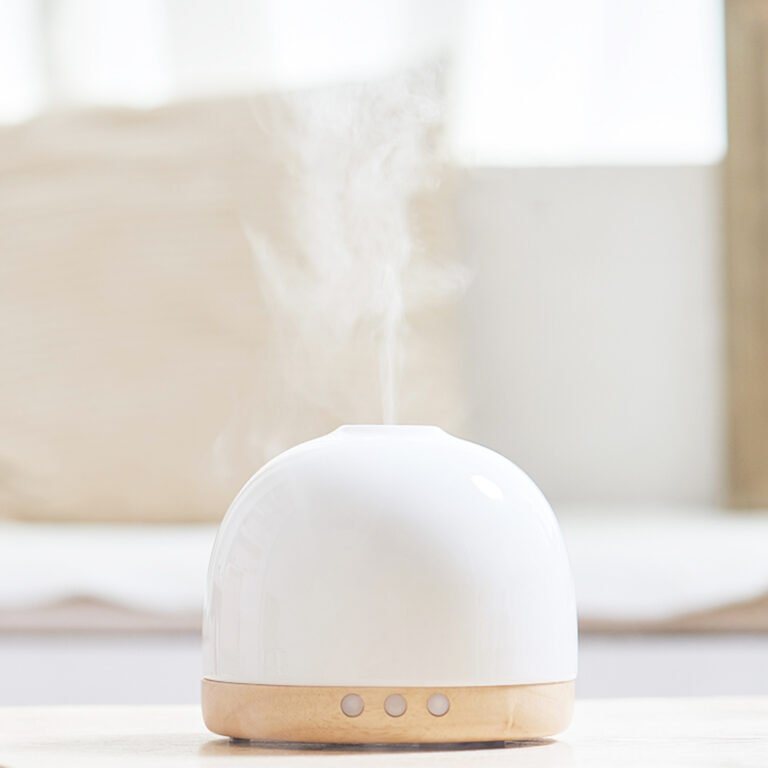
Ceramic Ultrasonic Diffuser
Well suited to premium home-fragrance, gifting and hospitality collections where surface finish and protective packaging matter.
Compare wholesale selection checks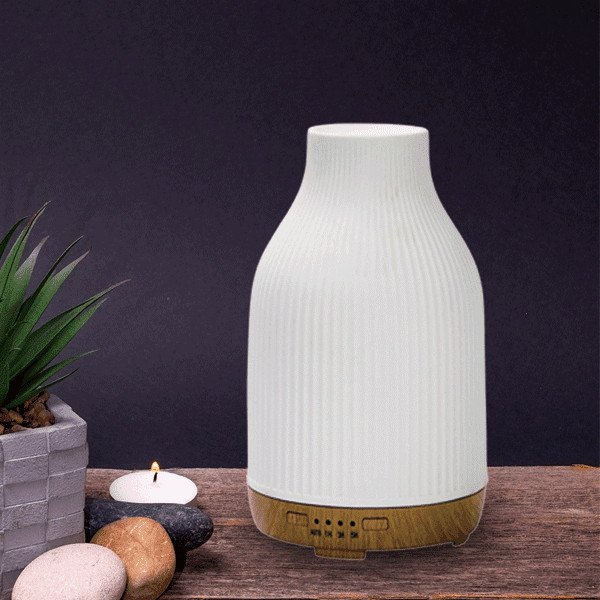
Patterned Ceramic Diffuser
Decorative cut-outs and lighting create a stronger shelf story. Check ceramic edges, light consistency, assembly fit and drop-test packaging.
Ask about patterned ceramic models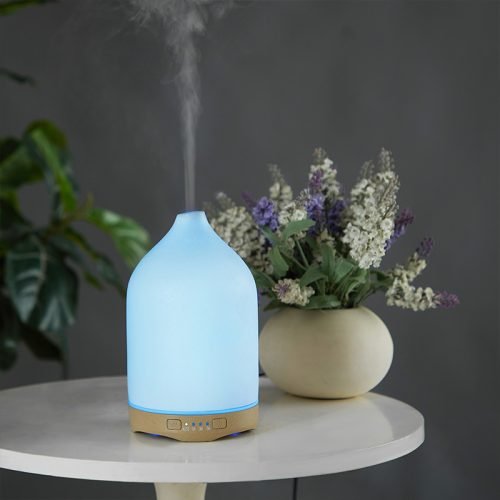
Porcelain Color Collection
A strong choice for seasonal color stories or lifestyle stores. Approve color samples and define acceptable glaze variation before production.
Discuss color customization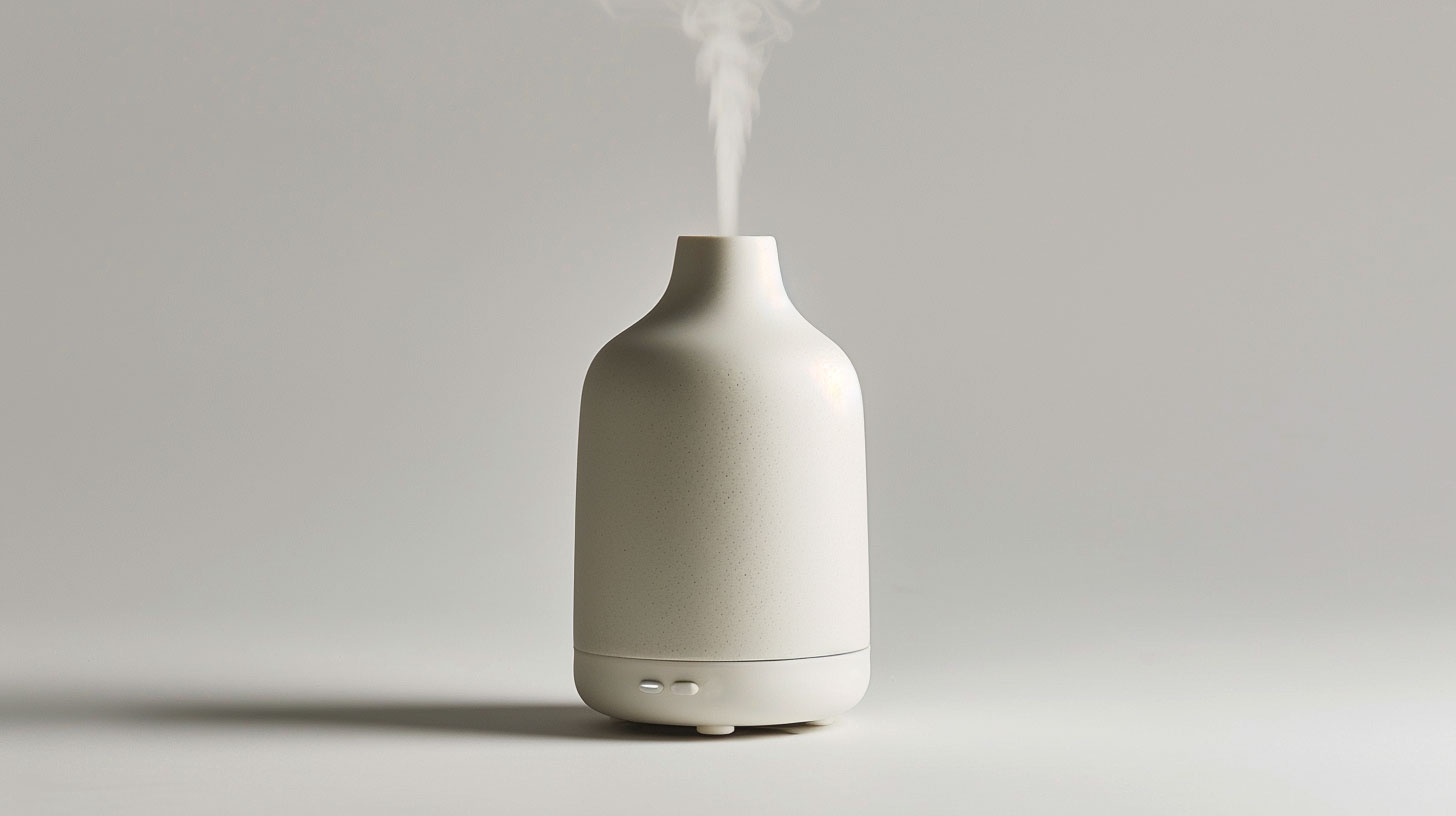
Minimal Ultrasonic Diffuser
Clean forms suit modern home, office and subscription-box collections. Verify button operation, timer modes, mist output and packaging presentation.
Request current ultrasonic modelsHow to Choose the Right Ultrasonic Diffuser
- Application: define the room, customer and sales channel before comparing designs.
- Capacity: select the tank around runtime and product size, not a bigger-is-always-better assumption.
- Mist modes: verify continuous, intermittent and timer operation on the exact sample.
- Noise: request test conditions and assess the fan and atomizer in a quiet room.
- Materials: review the water-contact tank, outer housing, finish and oil compatibility.
- Cleaning: check opening size, drainage direction, plate access and residue removal.
- Power: confirm voltage, adapter, plug, cable and destination-market requirements.
- Protection: test water-level shut-off and any other stated safety function.
- Packaging: protect ceramic, glass and decorative covers against movement and impact.
- Documents: request model-specific files required for the destination market.
Where Ultrasonic Diffusers Fit Best
| Application | Useful Features | Purchasing Note |
|---|---|---|
| Home and gifting | Quiet modes, attractive housing, simple controls and gift-ready packaging | Create a clear price ladder with core and premium designs |
| Office and reception | Low noise, moderate output, timer and neutral styling | Consider scent policies and shared-space sensitivity |
| Spa and salon | Easy cleaning, stable operation and design suited to the room | Define who refills and maintains the unit |
| Hotel guest room | Simple controls, low maintenance and secure placement | Avoid positioning near water, towels or guest luggage |
| Bathroom | Compact size, controlled mist and a stable dry placement | Use the bathroom diffuser guide |
Using and Cleaning an Ultrasonic Diffuser
- Place the diffuser on a stable, dry and level surface.
- Unplug the unit before filling, emptying or cleaning it.
- Follow the fill line, oil quantity and water guidance in the exact product manual.
- Keep water away from air inlets, connectors and the electrical base.
- Empty and wipe the tank as required, especially when changing fragrance.
- Clean the atomizing plate gently; do not scratch or press it with a hard tool.
- Allow cleaned parts to dry before reassembly.
Weak or missing mist can result from the water level, incorrect assembly, blocked airflow, residue on the atomizing plate or a power issue. Follow the exact model manual first, then compare the unit with an approved sample before replacing components or changing the recommended water type.
Wholesale and Private-Label Purchasing Checklist
Before approving an ultrasonic diffuser, compare the physical sample with the quotation, specification sheet and packaging files. Attractive photos cannot replace controlled product evidence.
- Approved model and revision
- Tank and housing materials
- Capacity, modes and measured runtime
- Noise and mist-output test conditions
- Water-level shut-off verification
- Adapter, plug and cable specification
- Logo, color and surface-finish approval
- Gift box, insert and user manual
- Available product documents
- Inspection and shipment criteria
Claims to Avoid
Do not make universal statements that an ultrasonic diffuser purifies the air, kills bacteria or viruses, treats medical conditions, guarantees sleep, preserves every oil property, or is safe for every pet and child. Product descriptions should focus on verified functions such as mist modes, timer, lighting, material, capacity, power, automatic shut-off and customization.
Frequently Asked Questions
Does an ultrasonic diffuser use heat?
No heating element is required to create the mist. The diffuser uses an atomizing plate and airflow, although the electronic components may generate a small amount of normal operating warmth.
Is an ultrasonic diffuser the same as a humidifier?
No. It releases a small amount of water mist, but its main purpose is fragrance diffusion. Read the diffuser versus humidifier guide for a complete comparison.
Which water should be used in an ultrasonic diffuser?
Follow the manual for the exact model. Water guidance varies by diffuser design and local water quality, so do not apply one universal rule.
Why is an ultrasonic diffuser not producing mist?
Check the power supply, water level, cover assembly, air inlet and atomizing plate. Residue or incorrect filling can reduce mist output.
How much essential oil should be added?
Use the quantity stated in the model instructions and begin at the lower end when scent intensity is uncertain. Excess oil can leave residue and affect performance.
What should wholesale buyers inspect on a sample?
Inspect the finish, tank, controls, mist modes, runtime, noise, power components, automatic shut-off, packaging and documents for the exact model.
Need the Right Ultrasonic Diffuser for Your Market?
Tell DIFFUSERO your target customer, preferred material, capacity, functions, packaging and order quantity. We will help you shortlist suitable models and prepare a practical OEM or wholesale quotation.
Request a Catalog and Quote