
Develop a diffuser that fits your brand, target customer and sales channel. DIFFUSERO supports model selection, logo application, colors, housing, functions, accessories, retail packaging and new-product development according to the exact project.
A custom oil diffuser project may be as straightforward as adding your logo and branded packaging to an existing model, or it may involve changes to the housing, controls, accessories and product structure. The correct route depends on what your market actually needs—not on how many changes can be added to a specification sheet.
Retailers, distributors, importers, private-label brands, subscription programs and hospitality purchasing teams can begin with the current DIFFUSERO diffuser range. From there, the selected model and requested changes can be reviewed for feasibility, sampling and production approval.
DIFFUSERO can support private-label customization, selected changes to existing diffuser platforms and new-product development. Logo method, colors, materials, functions, packaging, order quantity, tooling, schedule and market documents must be confirmed for the exact model and project.
The development path varies by model, requested changes, tooling and approval requirements. Use these six stages as project controls rather than treating them as a fixed delivery promise.
Define the customer, sales channel, technology, price position, quantity and launch goal.
Compare existing products, adaptation options and new-development requirements.
Confirm materials, functions, controls, power, accessories, branding and packaging.
Check appearance, operation, logo, artwork, accessories and packaging against written criteria.
Lock the approved reference sample, critical checks and change-control requirements.
Coordinate production milestones, inspection, packing and the agreed shipping arrangement.
Customization must be matched to the selected diffuser platform. A housing material, control system or packaging feature that works for one model may not transfer directly to another.
Logo position, marking method, artwork dimensions, labels, manuals and brand presentation.
Color direction, surface treatment, patterns, glaze, light transmission and visual details, subject to material and process.
Plastic, ceramic, glass, metal or mixed-material directions can be assessed for appearance, production and transport.
Output modes, timers, light behavior, buttons, power arrangement and accessories must be reviewed on the specific platform.
Box structure, protective inserts, manuals, labels, artwork and export-carton planning around the product and sales channel.
Build a coordinated collection by technology, material, price position and merchandising role instead of relying on one model for every buyer.
The lightest route that creates enough market distinction usually keeps technical and approval risk easier to manage.
| Project Route | Typical Scope | Best Fit | Buyer Checks |
|---|---|---|---|
| Private Label | Existing model with approved logo placement, artwork, inserts and branded packaging. | Market testing, line extensions and faster product launches. | Model availability, logo method, artwork size, packaging structure and included accessories. |
| Model Adaptation | An existing platform with selected changes to color, finish, housing details, controls, accessories or packaging. | Brands needing differentiation without beginning from a blank design. | Engineering feasibility, component compatibility, sample criteria, updated test scope and production consistency. |
| New Product Development | A new external form, internal layout or function brief that may require engineering, prototypes and tooling. | Distinctive collections with a defined opportunity, development budget and approval process. | Tooling responsibility, design ownership, prototype criteria, change control and approval milestones. |
These products illustrate different development directions. They are starting points for discussion, not a promise that every material, function or performance characteristic can be transferred between models.
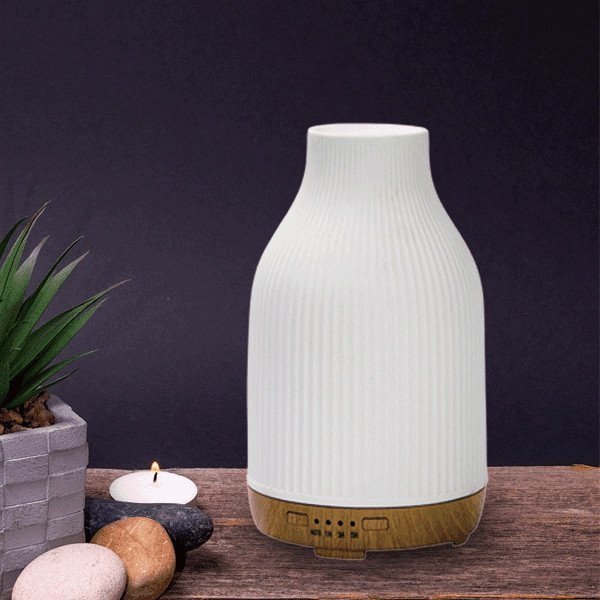
Discuss decorative covers, finish, light appearance, logo placement and protective retail packaging.
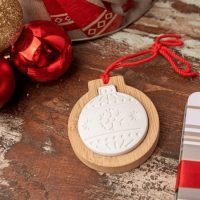
Useful for decorative forms, branded gifting, compact formats and packaging-led collections.
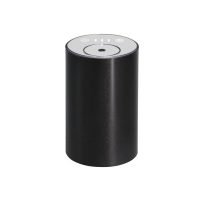
Confirm bottle format, oil path, controls, cleaning, power, output program and intended application.
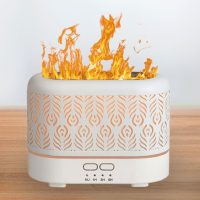
Discuss mist presentation, light behavior, controls and packaging while confirming exact performance separately.
Housing material and diffusion technology are not the same decision. A ceramic or glass cover may use an ultrasonic platform, while a compact metal housing may contain a waterless system.
| Direction | How It Differs | Customization Focus | Confirm Before Ordering |
|---|---|---|---|
| Ultrasonic | Uses water and an ultrasonic plate to produce a fine mist. | Tank and housing design, mist outlet, controls, light behavior, adapter and packaging. | Tank capacity, output modes, runtime, power input, cleaning access and model-specific functions. |
| Waterless | Atomizes oil without a water tank; the internal architecture varies by model. | Bottle fit, output cycles, interface, portability, oil path and housing. | Oil and bottle compatibility, consumption, noise, cleaning, power and intended setting. |
| Ceramic or Glass Housing | Describes the decorative housing, not necessarily the atomization method. | Shape, glaze or finish, light transmission, logo method and protective packaging. | Internal technology, finish consistency, dimensional tolerance, breakage protection and replacement planning. |
| Commercial Scent Machine | Designed for planned scent delivery in commercial environments, depending on the model architecture. | Housing, control method, installation, oil system, branding and service access. | Application, installation, coverage evidence, programming, oil compatibility, maintenance and local requirements. |
For technical preparation, review how ultrasonic diffusers work and the waterless and nebulizing diffuser guide.
A strong custom project is governed by written references rather than memory. The exact sample or prototype that becomes the production standard should be identified, and critical appearance, function, accessory and packaging checks should be recorded.
Use approved artwork, color references, specifications, accessory lists, packaging files and a master sample where applicable.
Require written approval before changing agreed materials, components, finish, controls, packaging or other details.
Define what will be checked, the acceptable result, the inspection stage and the evidence required before shipment.
Keep approved files and reference samples organized so later orders can be checked against the same standard.
It is a diffuser adapted or developed around a buyer's product brief. The scope may include branding and packaging, selected changes to an existing model, or a new design involving engineering and tooling.
Yes. An existing platform is often the most practical starting point for logo, color, finish, packaging or selected function changes. Availability depends on the exact model and requested scope.
No. Private-label projects and many model adaptations can use existing tooling. A new housing or structural design may require prototypes and new tooling after feasibility review.
These are common requests, but the suitable logo process, color method and packaging structure depend on the housing material, selected model, artwork, quantity and production review.
Choose according to the target customer, intended setting, fragrance-delivery preference, maintenance expectations, oil format, power arrangement and price position. Confirm performance model by model.
Approve the sample against written criteria covering appearance, operation, branding, artwork, accessories and packaging. Record the approved reference before mass production.
Share the target market, sales channel, preferred technology, material, functions, visual references, branding, packaging, estimated quantity, destination and desired schedule.
Verify the exact model's materials, power, output modes, runtime, noise, oil compatibility, cleaning method, included accessories, packaging, required documents and quality-control plan.
Tell DIFFUSERO your target customer, sales channel, preferred technology, material, functions, packaging and order quantity. We will help you shortlist suitable models and prepare a practical OEM or wholesale quotation.
Request a Catalog and Quote