
A nebulizing diffuser uses an air pump and a narrow oil pathway to create a pressure difference that draws essential oil upward and breaks it into fine airborne droplets. It uses oil directly, without adding water.
The terms nebulizing diffuser, waterless diffuser and cold-air diffuser are sometimes used loosely. They all describe systems that disperse fragrance without a water tank, but the internal mechanism, bottle connection, output, noise, coverage and intended application can differ considerably.
For accurate product comparison, separate classic glass nebulizers, bottle-direct portable models and larger commercial scent systems. They share waterless operation, but their pump design, bottle connection, output control, maintenance and intended coverage can be very different.
What Is a Nebulizing Diffuser?
A nebulizing diffuser is an aroma device that atomizes liquid fragrance or essential oil through airflow. Unlike an ultrasonic diffuser, it does not dilute the oil in a water tank. Unlike a candle or heat diffuser, it does not depend on a heating element to release the scent.
Because the fragrance is not diluted with water, the scent can feel more concentrated. That advantage comes with trade-offs: oil can be consumed faster, thick oils may require special compatibility checks, the air pump may be more audible and the atomizing pathway needs regular cleaning.
No water tank
The model connects to an oil bottle, glass reservoir or fragrance container rather than a water-filled tank.
Airflow atomization
A pump moves air through a narrow path, creating the pressure conditions needed to draw and atomize the oil.
Concentrated scent
Direct oil use can provide stronger fragrance, so adjustable intervals and output levels are especially important.
Main Components
| Component | Function | What Buyers Should Check |
|---|---|---|
| Air pump | Creates the pressurized airflow used for atomization | Noise, stability, output range, power consumption and expected service life |
| Oil pathway | Draws oil from the bottle or reservoir to the atomizing point | Tube material, clog resistance, cleaning access and oil compatibility |
| Atomizing chamber | Combines airflow and oil to produce fine droplets | Droplet consistency, leakage, residue buildup and replacement parts |
| Oil bottle or reservoir | Stores the fragrance used by the device | Bottle size, thread or neck fit, seal, orientation and refill procedure |
| Control board | Manages intensity, interval, timer and charging functions | Mode accuracy, memory settings, button logic and battery protection |
| Housing | Protects the mechanism and supports the intended application | Material, ventilation, spill resistance, surface finish and mounting method |
How Does a Nebulizing Diffuser Work?
Oil Is Connected
The essential-oil bottle or reservoir is fitted securely inside the diffuser.
Pump Moves Air
The air pump creates controlled pressure and airflow through a narrow channel.
Oil Is Drawn Up
The pressure difference pulls oil toward the atomizing chamber.
Droplets Disperse
Fine oil droplets leave the outlet and carry fragrance into the room.
The pump output, pathway diameter, bottle arrangement and control intervals determine how much oil is released. Coverage claims should be checked under stated room conditions rather than copied from another model.
Three Common Waterless Diffuser Types
| Type | Oil Connection | Main Strength | Main Trade-Off | Best-Fit Use |
|---|---|---|---|---|
| Bottle-direct portable | Oil bottle screws into or connects inside the housing | Compact, rechargeable and easy to refill | Bottle-neck compatibility and spill orientation need careful checking | Personal use, desks, travel, cars and compact rooms |
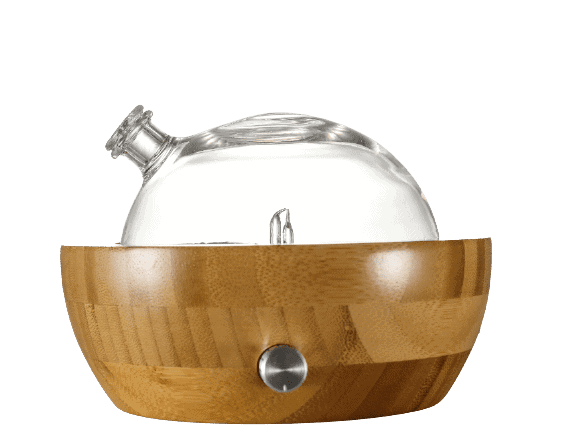
| Classic glass nebulizer | Oil sits in a hand-blown glass reservoir | Decorative appearance and visible atomizing process | Glass needs careful cleaning and protective packaging | Gift ranges, boutiques, studios and home fragrance |
| Commercial cold-air system | Larger bottle or cartridge inside a programmed scent machine | Scheduling, adjustable output and broader fragrance zones | Installation, maintenance and noise must suit the space | Hotels, stores, salons, gyms and reception areas |
Nebulizing vs Ultrasonic Diffusers
| Buying Factor | Nebulizing / Waterless | Ultrasonic |
|---|---|---|
| Water | No water tank | Uses a water tank |
| Fragrance intensity | Often stronger because oil is not diluted | Usually lighter and carried in water mist |
| Oil consumption | Can be higher, depending on output and interval settings | Usually lower per operating cycle |
| Noise | Air-pump sound may be noticeable | Fan and atomizer are often quieter, model-dependent |
| Humidity | Does not add water mist | Adds a small amount of local moisture |
| Cleaning | Oil pathway and atomizer need residue control | Tank and atomizing plate need water and oil-residue cleaning |
For more detail, read the ultrasonic diffuser guide and the diffuser versus humidifier guide.
Practical Advantages and Trade-Offs
No water filling
Users do not need to measure and refill a water tank before every operating cycle.
Stronger scent
Direct oil atomization can create a more concentrated fragrance experience.
Portable options
Rechargeable bottle-direct models can support desks, travel and compact personal spaces.
Trade-offs matter
Oil consumption, pump noise, residue and bottle compatibility must be tested.
Direct atomization does not prove that every oil property is “fully preserved,” nor does it guarantee therapeutic or medical results. Product copy should describe the mechanism and verified performance instead of promising health outcomes.
Waterless Product Directions
The product pictures below are placed inside full-dimension studio frames. The HTML does not crop the product, even when the source image is square, narrow or surrounded by a white background.
Portable Bottle-Direct Diffuser
A compact direction for personal spaces, travel and smaller rooms. Check compatible bottle sizes, charging, intervals, leak protection and operating noise.
Ask about portable bottle-direct models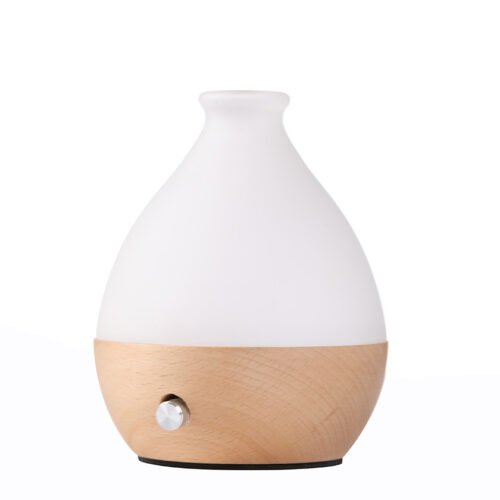
Classic Glass Nebulizer
A visually distinctive option for boutiques and premium gift ranges. Inspect glass consistency, oil pathway, output, cleaning tools and protective packaging.
Ask about glass nebulizer models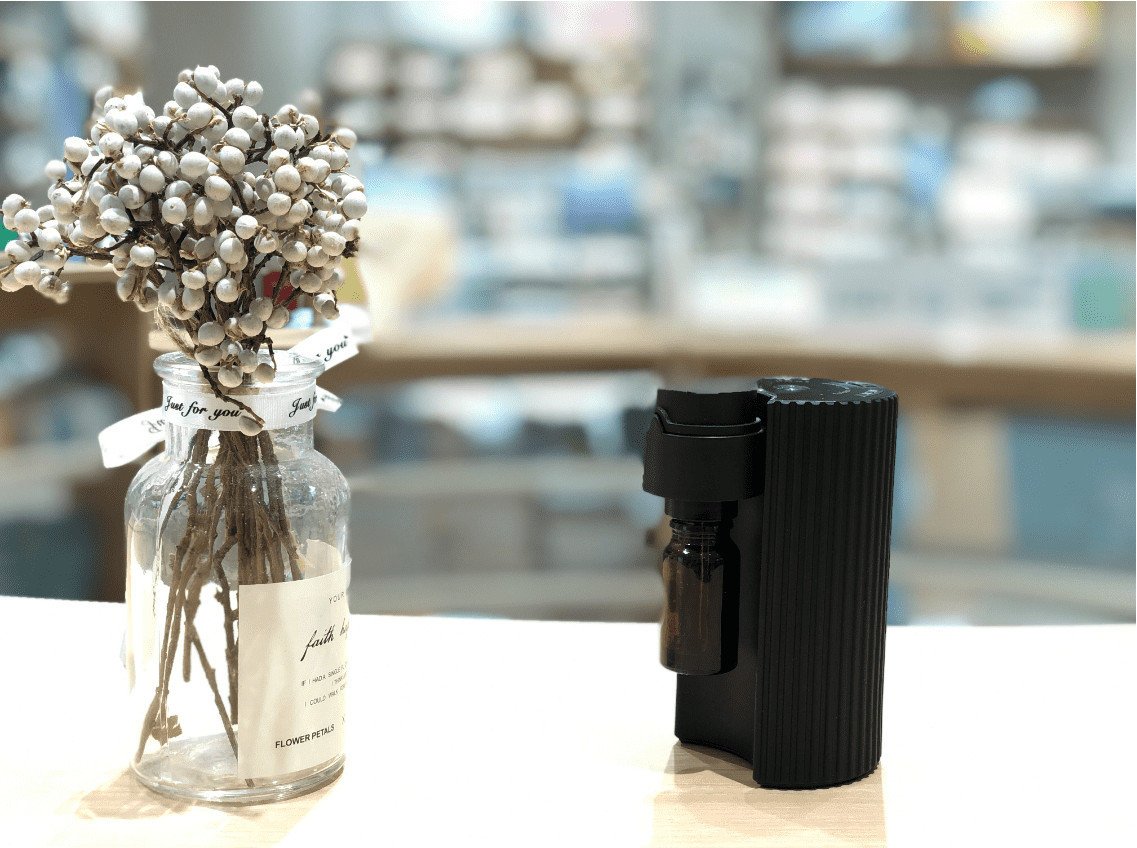
Modern Waterless Diffuser
A clean housing can fit contemporary fragrance collections. Confirm bottle installation, output modes, charging port, control logic and accessory set.
Ask about modern waterless models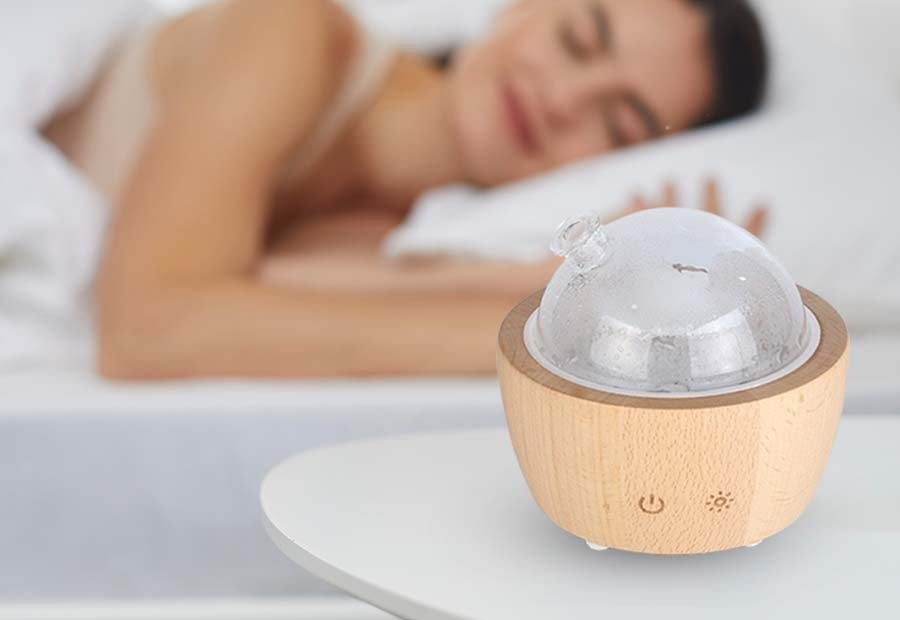
Room and Hospitality Direction
For larger applications, compare actual coverage, programming, maintenance access, oil capacity and installation rather than choosing by appearance alone.
Request hospitality diffuser optionsHow to Choose a Waterless Diffuser
- Application: define personal, home, vehicle, retail or hospitality use before comparing products.
- Oil connection: check bottle sizes, neck type, reservoir, seal and refill procedure.
- Output control: verify intensity levels, interval timing and timer duration on the exact sample.
- Oil consumption: request test conditions and expected use at each setting.
- Noise: assess pump sound in a quiet room and at the intended installation distance.
- Oil compatibility: test thicker, resinous or formulated oils before approval.
- Orientation: confirm whether the model must remain upright and how it prevents leakage.
- Power: review battery capacity, charging connector, adapter and plug requirements.
- Cleaning: check access to tubes, glass, atomizer and replacement components.
- Documents: request model-specific files required for the destination market.
Oil Compatibility and Consumption
A waterless diffuser does not automatically accept every essential oil or fragrance oil. Thin oils may atomize easily, while viscous, resinous or carrier-oil blends may move slowly, leave residue or block the pathway. Request a supplier compatibility list and test the exact oils planned for sale.
Oil consumption depends on pump output, operating interval, intensity, oil viscosity and room conditions. Avoid presenting a universal hourly rate unless it comes from a controlled test of the exact model.
Where Waterless Diffusers Fit Best
| Application | Useful Features | Purchasing Note |
|---|---|---|
| Personal and desk use | Compact size, low setting, rechargeable battery and easy bottle replacement | Keep output moderate in close-range use |
| Vehicle | Secure bottle, stable mounting, USB charging and interval operation | Confirm temperature and spill requirements for the intended vehicle environment |
| Boutique retail | Decorative design, controlled scent and simple maintenance | Place the unit where customers cannot easily tip or tamper with it |
| Hotel and spa | Scheduled operation, refill access and adjustable intensity | Define staff responsibility for oil replacement and cleaning |
| Humid regions | No added water mist | Room humidity is only one factor; compare scent strength, noise and maintenance too |
Cleaning and Maintenance
- Switch off and disconnect the diffuser before removing the bottle or reservoir.
- Keep the unit upright unless the manual states otherwise.
- Wipe exterior oil promptly to protect coatings, labels and surrounding surfaces.
- Clean the atomizing pathway at the interval stated in the model instructions.
- Clean before changing to a very different fragrance to reduce scent carryover.
- Inspect tubing, glass, bottle seals and connectors for damage or residue.
- Replace worn parts with components approved for the exact model.
Wholesale and Private-Label Purchasing Checklist
Approve the product from measured specifications and samples, not from the category name alone. Two “waterless diffusers” can have completely different pump systems, bottle connections and intended coverage.
- Product type and intended application
- Oil bottle or reservoir specification
- Output and interval settings
- Oil-consumption test conditions
- Operating noise and measurement distance
- Battery, charging and power specification
- Oil compatibility and cleaning method
- Logo, color and packaging approval
- Available product documents
- Inspection and shipment criteria
Claims to Avoid
A waterless diffuser should not be described as universally safe, silent, maintenance-free, therapeutic, medically beneficial or compatible with every oil. Avoid claiming that direct atomization guarantees all oil properties remain unchanged. Use verified language about waterless operation, controls, oil connection, output, power, materials and intended application.
Frequently Asked Questions
Is a nebulizing diffuser the same as a waterless diffuser?
The terms often overlap, but “waterless diffuser” can include several product architectures. Confirm whether the model is bottle-direct, a classic glass nebulizer or a larger cold-air scent system.
Does a nebulizing diffuser use heat?
No heating element is required for the atomization process. The device uses airflow and pressure conditions to disperse the oil.
Does a waterless diffuser add humidity?
No. It does not use a water tank, so it does not release water mist into the room.
Why is a nebulizing diffuser louder than an ultrasonic diffuser?
A nebulizing model uses an air pump, and the pump can be more audible than the fan and atomizer in many ultrasonic diffusers. Noise varies by model and output setting.
Can every essential oil be used?
No universal compatibility should be assumed. Thick, resinous or carrier-oil blends may atomize poorly or leave residue. Test the exact oil with the exact diffuser.
What should wholesale buyers inspect on a sample?
Inspect the bottle connection, output modes, interval timing, consumption, noise, charging, leakage, oil compatibility, cleaning access, packaging and documents.
Need the Right Waterless Diffuser for Your Market?
Tell DIFFUSERO the intended application, preferred bottle size, output controls, housing, packaging and order quantity. We will help you shortlist suitable models and prepare a practical OEM or wholesale quotation.
Request a Catalog and Quote