

No. An ultrasonic diffuser adds a small amount of moisture while dispersing fragrance, but it is not designed to replace a humidifier or control the humidity of a full room.
A diffuser and a humidifier can look remarkably similar on a product page. Both may contain a water tank, both may use ultrasonic vibration, and both may release a cool mist. That visual similarity is precisely where the confusion begins.
The difference is not the mist you can see. It is the purpose, output, capacity and control system behind the mist. A diffuser is primarily a scent-delivery product. A humidifier is an air-moisture appliance.
Diffuser vs Humidifier at a Glance
| Buying Factor | Essential Oil Diffuser | Humidifier |
|---|---|---|
| Primary purpose | Disperse essential oil or fragrance and improve ambience | Add measurable moisture to dry indoor air |
| Mist output | Usually light and fragrance-focused | Usually higher and designed for sustained moisture delivery |
| Tank and runtime | Generally smaller; optimized for personal or room scenting | Generally larger; optimized for longer humidification cycles |
| Essential-oil use | Designed for oil use when specified by the diffuser maker | Use oil only when the humidifier maker explicitly permits it |
| Humidity control | Normally no humidistat or room-humidity target | May include a humidistat, output control or room-coverage specification |
| Typical applications | Home décor, gifting, spas, salons, hotel rooms, offices and retail | Bedrooms, living spaces and other areas where dry air is the main concern |
What Is an Essential Oil Diffuser?
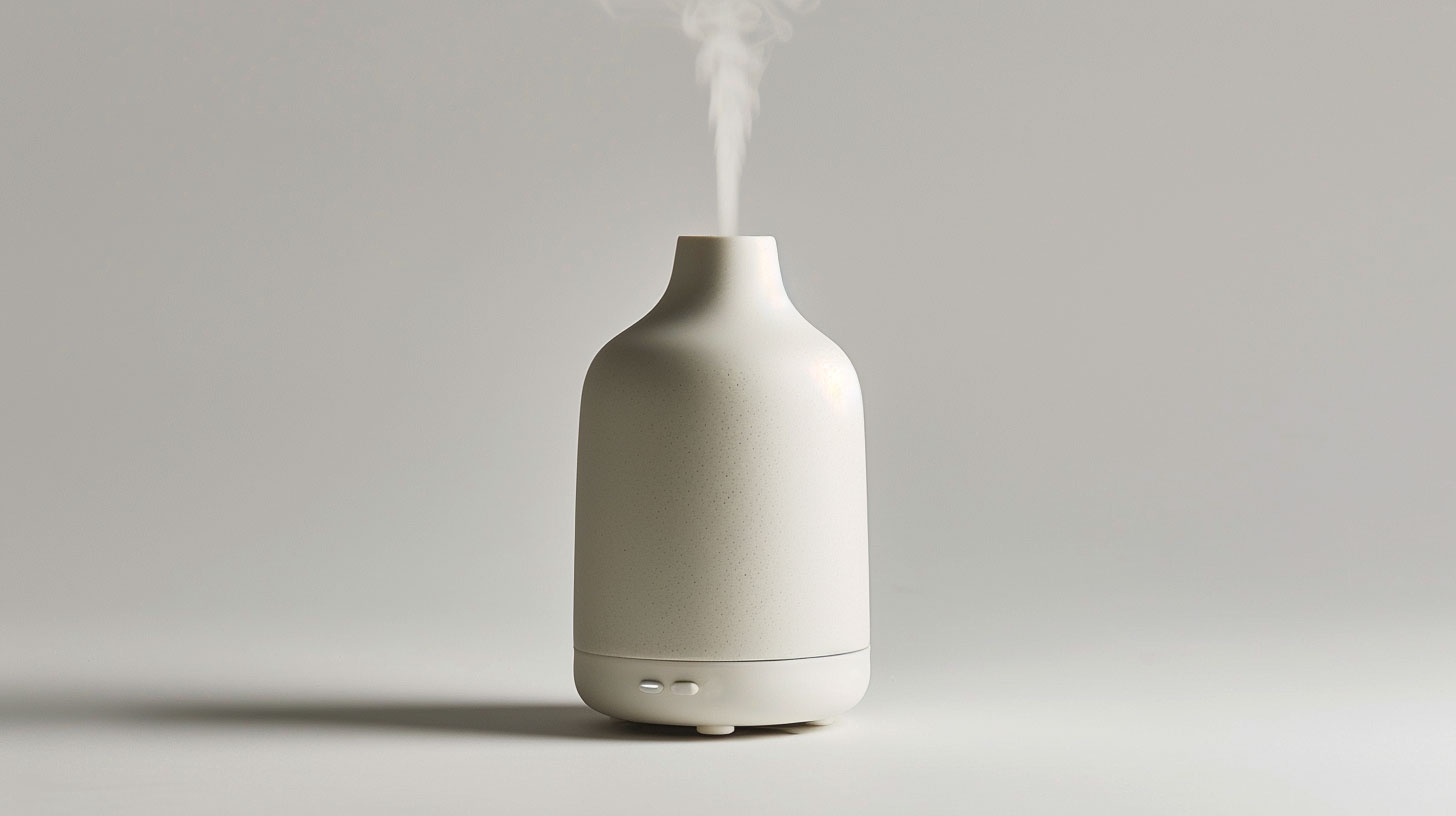
An essential oil diffuser is designed to disperse scent into the surrounding air. The most familiar version is the ultrasonic diffuser, which combines water with a small amount of essential oil and uses a vibrating ceramic plate to produce a fine, cool mist.
Other technologies work differently. A nebulizing or waterless diffuser atomizes oil without a water tank, so it produces fragrance without adding meaningful humidity.
What buyers notice
Compact size, decorative housing, ambient lighting, fragrance performance, quiet operation and ease of cleaning.
What it is not built to do
Maintain a target relative-humidity level or deliver the sustained moisture output expected from a dedicated humidifier.
What Is a Humidifier?
A humidifier is designed to increase moisture in indoor air. Depending on the model, it may use ultrasonic, evaporative or warm-mist technology. Its product architecture is typically focused on water capacity, output, runtime, room coverage and moisture control rather than fragrance.
The U.S. Environmental Protection Agency advises keeping indoor relative humidity within a controlled range and warns against excessive humidification. That is another clue: a true humidifier is selected and operated around measurable room moisture, not merely visible mist.
Why Are Diffusers and Humidifiers So Easy to Confuse?
Similar appearance
Compact ultrasonic humidifiers and aroma diffusers may use the same modern silhouettes, top-fill designs and cool-mist visuals.
Shared technology
Both products may use high-frequency vibration, but their output targets and intended functions can be very different.
Loose product naming
Marketplace listings sometimes use “diffuser,” “humidifier” and “aroma humidifier” too casually, creating avoidable buyer confusion.
Does an Ultrasonic Diffuser Add Any Humidity?
Yes, a water-based ultrasonic diffuser releases water droplets into the air, so it contributes a small amount of moisture near the device. However, that does not make it an effective substitute for a room humidifier.
Most diffusers have a relatively modest tank and are optimized for scent dispersion. They generally do not measure relative humidity, maintain a humidity target or provide the higher sustained output expected from a dedicated humidifier.
For a desk, bedside table or small treatment room, the mist may feel pleasant. For managing genuinely dry indoor air, select a humidifier based on room size and measured humidity.
Which Device Should You Choose?
Choose a diffuser when:
- The main goal is fragrance or ambience.
- Appearance is important for retail, gifting or hospitality.
- You want adjustable mist, lighting or timer functions.
- You need ultrasonic or waterless scent-delivery options.
- You plan to customize the housing, color, logo or packaging.
Choose a humidifier when:
- The main goal is increasing room moisture.
- You are selecting by room size or humidity reading.
- Long runtime and larger water capacity matter most.
- You need output control or a built-in humidistat.
- Fragrance is secondary or not required.
Using both devices is also possible when fragrance and humidity are separate priorities. Place and maintain each appliance according to its own manual rather than expecting one device to do two jobs badly—a classic case of saving one appliance and buying two headaches.
B2B Buying Guide: What Retailers and Importers Should Verify
For commercial sourcing, the label on the carton is not enough. Compare the product architecture and supporting evidence before deciding whether a model should be sold as a diffuser, humidifier or approved hybrid device.
- Diffusion technology and intended application
- Mist output and verified room-use guidance
- Tank material and oil compatibility
- Runtime, timer modes and auto shut-off
- Operating noise and cleaning method
- Power supply and target-market plug
- Relevant test reports and documents
- Logo, housing and packaging customization
- MOQ, sample process and lead time
- QC checkpoints and pre-shipment inspection
How to Position Diffusers Without Misleading Customers
Retailers and private-label brands should lead with what the product genuinely does well: fragrance delivery, decorative value, quiet operation, mood lighting, portability and customization. Avoid presenting a standard aroma diffuser as a medical device, air purifier or full-room humidifier unless the specific model has been designed and tested for that purpose.
Clear packaging copy reduces returns and protects buyer trust. A useful statement is:
“Designed for fragrance diffusion. The water-based mist may add light local moisture but is not intended to replace a dedicated humidifier.”
For custom projects, DIFFUSERO can help buyers compare ultrasonic, waterless and decorative diffuser options. Review the custom diffuser process or explore wholesale aroma diffuser solutions before confirming a product brief.
Related DIFFUSERO Guides
Continue your research with these practical diffuser technology, product and wholesale resources.
Frequently Asked Questions
Is a diffuser the same as a humidifier?
No. A diffuser is mainly designed to disperse fragrance or essential oil, while a humidifier is designed to raise and manage moisture in the air.
Can an essential oil diffuser humidify a room?
A water-based ultrasonic diffuser releases a small amount of moisture, but its tank and output are generally too limited to replace a dedicated room humidifier.
Can I use only water in an essential oil diffuser?
Many ultrasonic diffusers can operate with water only, but follow the model’s instructions. Without oil, the unit still produces mist but provides no fragrance benefit. If the unit produces little or no mist, use the diffuser troubleshooting guide.
Can I put essential oil in a humidifier?
Only when the humidifier manufacturer explicitly approves oil use or provides a separate aroma tray. Otherwise, oil may damage components or affect warranty coverage.
Do waterless diffusers add humidity?
No. Waterless nebulizing diffusers atomize oil without water, so they do not add meaningful moisture to the room.
What should wholesale buyers compare?
Compare technology, materials, output, runtime, noise, cleaning, safety functions, packaging, customization, documents, MOQ, lead time and quality-control evidence.
Need the Right Diffuser for Your Market?
Tell DIFFUSERO your target customer, preferred technology, branding needs and estimated quantity. Our team will help shortlist suitable models and prepare a practical wholesale or OEM quotation.
